Verrucas And Warts: Causes, Symptoms & Treatment Options
By Claire Jackson, an HCPC-registered podiatrist with a BSc and Diploma in Podiatric Medicine.
Published On: September 2, 2026Last Updated: October 15, 2026
It usually starts when you notice a tiny rough patch on the bottom of your foot, and assume it’s nothing. Then it starts to hurt when you walk. Then it refuses to leave. Suddenly you’re wondering why you’re sharing your foot with an uninvited lodger, and the only rent they’re paying is an increasing level of pain.
You have a verruca. And the bad news is, shifting it may not be as easy as serving an eviction notice.
Verrucas and warts are caused by the human papillomavirus (HPV), with a verruca simply being a wart that develops on the sole of your foot. Verrucas are extremely common and usually harmless, but they can be uncomfortable, tend to stubbornly refuse to budge, and they’re catching. Many do clear up on their own (eventually), but you can be looking at a wait of two years or more for that to happen, and in the interim, they may become painful or persistent enough to need treatment.
But What Is A Verruca?
We know, saying it’s a wart is confusing. Why not just call it a wart? The upshot is location, but the longer version is that a verruca is a plantar wart: a wart that develops on the sole of the foot. And because you’re a busy person with a life full of standing and walking and running and all manner of things involving your feet, that wart gets pushed inwards beneath harder skin, rather than growing outwards as a wart elsewhere on your body would.
So, the pressure is whyverrucas and warts look so different, even though they’re the same thing: the virus that raises a firm, rough lump on a knuckle gets pressed flat into the sole of your foot.
What Does A Verruca Look Like?
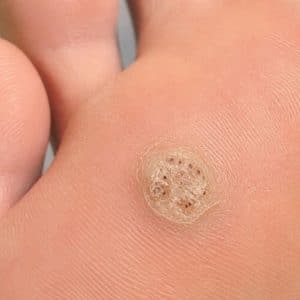
A verruca usually looks like a rough, hardened patch of skin, often with tiny dark red or black dots inside it. Those dots areclotted small blood vessels, not a ‘root’, whatever the playground says. Single verrucas can be painful as they’re pressed inwards, while clusters known as mosaic verrucas are often less painful.
Corns are a common source of confusion. Skin lines run through a corn butbreak around a verruca. A verruca is also usually more tender when squeezed from the sides, whereas a corn hurts more when you press straight down on it.
What Causes Verrucas And How Do They Spread?
Verrucas are caused by HPV getting into the skin, most easily through small cuts or abrasions. The virus spreads through direct contact or contaminated surfaces, and damp skin is more vulnerable, which is why swimming pools, communal showers and changing rooms get the blame. Picking or scratching a verruca can also spread it to other areas of your own skin.
Symptoms may not appear untilmonths after you catch the virus, so it’s often impossible to know where it came from. To avoid passing it on, change your socks daily, don’t share towels or shoes, and don’t go barefoot in public changing areas.
Covering a verruca when swimming helps reduce the risk of spreading it. A plaster or averruca sock keeps the virus contained while you’re in the pool, but it won’t treat the verruca itself (and verruca socks are desperately over-hyped; a waterproof plaster is all you need).
Leaving one alone doesn’t mean you can’t be considerate. Covering it with awaterproof plaster in shared wet areas lowers the chance of passing it on, even though the virus is so widespread that most people, children especially, come across it at some point anyway. Treatment is about whether it bothers you, not about protecting everyone else.
Treatment is worth considering if a verruca is painful, spreading, keeps coming back or is getting in the way of everyday life. And if you’ve used a pharmacy treatment consistently for three months with no change, it’s time to have it looked at rather than buy another box.
What Verruca Treatment Options Are Available?
Options range from simply letting the verruca clear on its own to pharmacy products containing salicylic acid. These need patience: salicylic acid is usuallyapplied daily for at least 12 weeks, so a week or two without improvement doesn’t mean it’s failed. Filing helps, but only on the layer the acid has already softened. Going at a verruca with a pumice stone or nail file to rub it away hurts, can make it bleed and can spread it to the skin around it.
Professional options include cryotherapy (freezing) and clinic treatments such as SWIFT microwave therapy and verruca needling. There’s no singlebest verruca treatment: what works depends on how long you’ve had it, how much it bothers you and what you’ve already tried.
SWIFT Or Verruca Needling?
If you’re heading for clinic treatment, these are the two options you’re most likely to weigh up. Both are used for persistent verrucas, but they’re carried out very differently, so choosing between SWIFT and needling comes down to the verruca, your medical history, what you’ve already tried and, not least, how you feel about needles.
When Should You Get A Verruca Checked?
Increasing pain, redness, swelling, pus or discharge aresigns of an infected verruca, and mean it needs checking rather than treating at home. Unusual bleeding or a noticeable change in how it looks should be checked too.
Get advice before treating it yourself if you have diabetes, poor circulation, reduced feeling in your feet or a weakened immune system, or if you’re simply not sure it’s a verruca.
Verruca Treatment At Northwich Foot Clinic
If your verruca is painful, persistent or has had three months of pharmacy treatment without budging, our podiatrists can confirm what it is and talk you through the options, includingSWIFT microwave therapy and verruca needling for verrucas that won’t shift.
Autumn Foot Care Tips for Healthy Feet This Season
Autumn has a habit of changing everything at once. One week your feet are in sandals; the next they’re back in socks and boots, splashing through wet pavements while the [...]
Verruca Socks: Do They Work And When Should You Use Them?
We all have flashbacks to childhood of being sent into swimming lessons wearing the dreaded verruca sock. The embarrassment. The ridicule. The general grossness of the things themselves (peeling them [...]
Toenail Reconstructions: Everything You Need To Know About
Toenail reconstruction is a cosmetic treatment designed to improve the appearance of damaged, misshapen, discoloured or partially missing toenails. A specialist flexible gel is built over the existing nail or [...]
If you are having, or have recently had, nail removal surgery, knowing what happens afterwards can make recovery much easier to manage. Healing varies depending on whether part or all [...]
Toenail Removal & Nail Surgery: Everything You Need To Know
You might need toenail removal for a variety of reasons. It is a small operation, but it is perfectly normal to feel worried about it. Nail surgery can sound daunting, [...]